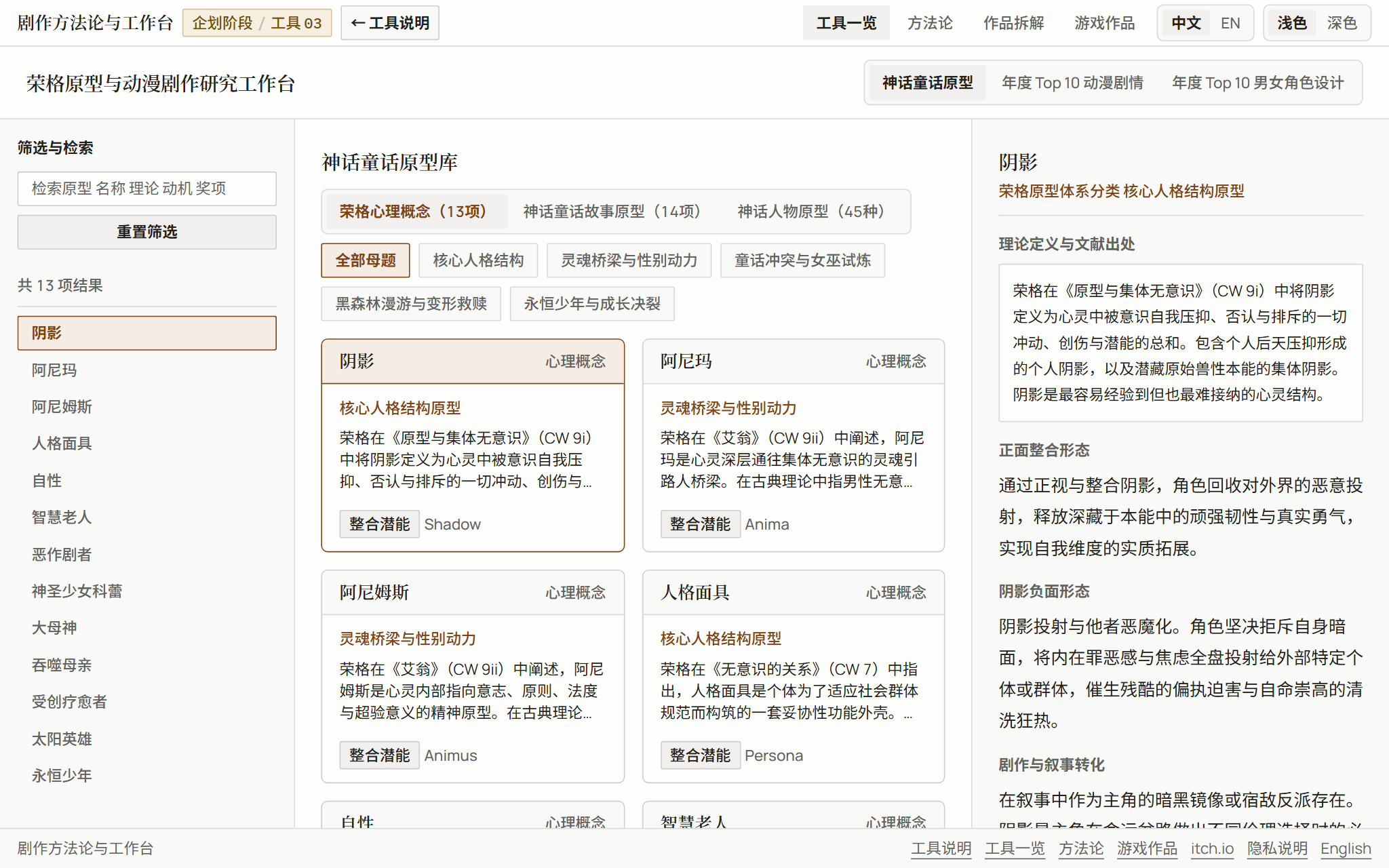
Core Capabilities
- 13 Jungian concepts, 14 mythic story motifs, and 47 character archetype entries detailing healthy integration, shadow pathology, and dramatic function. #view=archetypes
- 110 annual anime plot analyses (2015–2025) filterable by year, motif, and conflict structure. #view=plots
- 220 annual male and female character design analyses (2015–2025) examining persona, inner lack, and value choices. #view=characters
Underlying Methodology
Treats archetypes not as static personality labels, but as psychological engines that force costly choices and expose blind spots along the story’s primary value axis.
Theoretical References
- C. G. Jung, Analytical Psychology (Shadow, Anima/Animus, Persona, Self)
- Comparative mythology & fairy-tale motif analysis
- Victoria Lynn Schmidt, 45 Master Characters
- Text-only structural case studies of annual top anime plots and characters (2015–2025)
Getting Started in Three Steps
- Select core psychological concepts or character archetypes during the Planning character branch.
- Use the Shadow pathology and narrative transformation sections to define your protagonist and antagonist blind spots.
- Filter 2015–2025 plot and character cases for structural precedents before drafting your character survey.